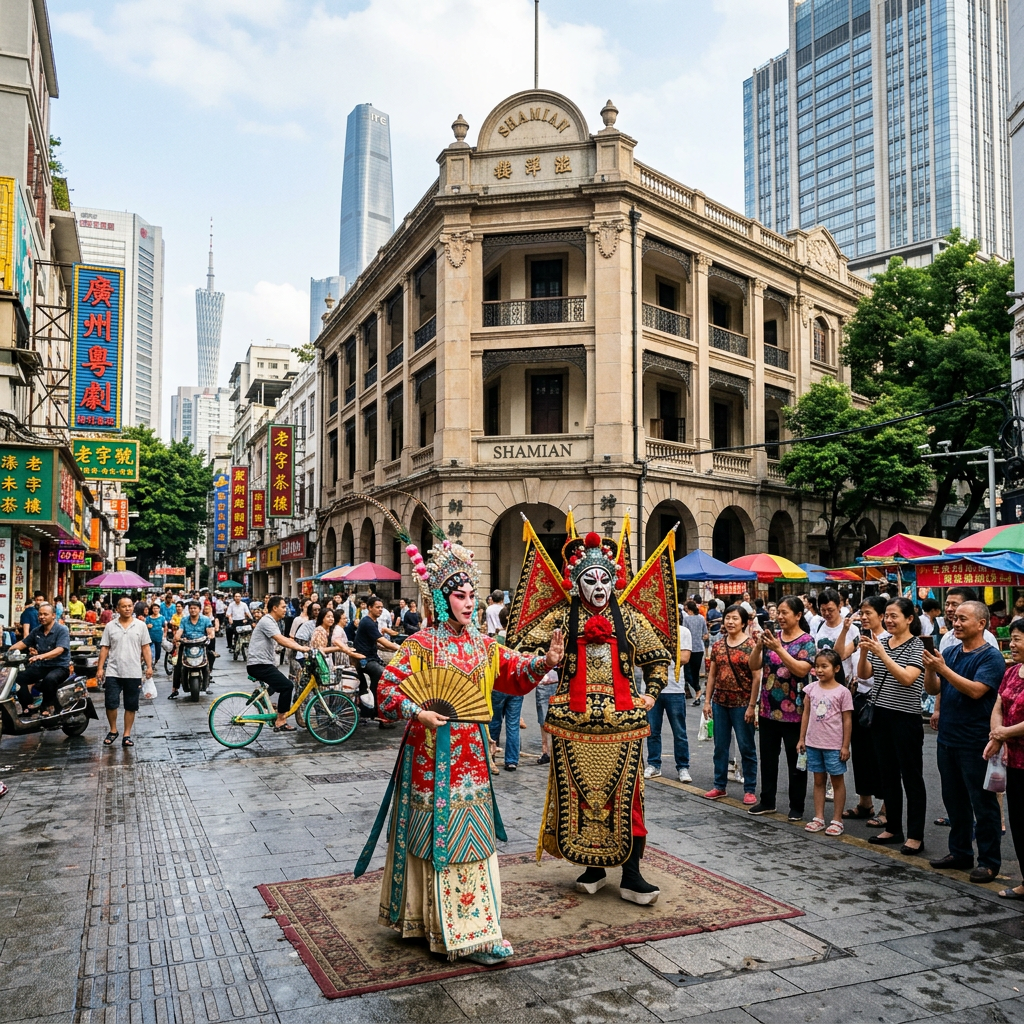
Cantonese Dim Sum: A Feast of Flavors and Traditions
Cantonese dim sum is a delightful culinary tradition that originates from Guangdong Province in southern China. This style of cuisine features a wide variety of small dishes, each offering a unique taste and texture. Dim sum is traditionally served at brunch or lunchtime, and the communal sharing of these bite-sized delights makes for a social and enjoyable dining experience. History and Origins Introduction The term "dim sum" translates roughly to "touch the heart," reflecting the idea that these dishes are meant to be savored and enjoyed. The origins of dim sum date back to the Tang Dynasty, when tea houses along the Silk Road began serving small snacks to travelers. Over time, the tradition evolved into a refined dining experience, particularly in Guangdong, where dim sum became a staple of the local cuisine. Types of Dim Sum Signature Dishes Dim sum encompasses a vast array of dishes, including steamed, fried, and baked items. Here are some classic examples: Har Gow (Shrimp Dumplings): These translucent dumplings filled with fresh shrimp are a favorite among dim sum lovers. The delicate wrapper is made from rice flour, giving them a soft and slightly chewy texture. Siu Mai (Pork and Shrimp Dumplings): Another popular…
Beijing Roast Duck: A Timeless Delicacy
Beijing Roast Duck, often referred to simply as Peking Duck, is one of China’s most iconic culinary treasures. This dish has a history dating back over 600 years, originating in the imperial kitchens of ancient Beijing during the Ming Dynasty. Today, it remains a symbol of Chinese cuisine and is enjoyed both within China and internationally. Preparation and Cooking Technique Introduction The preparation of Beijing Roast Duck is meticulous and involves several key steps. First, a high-quality duck is selected, typically a special breed known for its plumpness and tender meat. The duck is then cleaned and seasoned with a mixture of spices and sauces, which can include soy sauce, sugar, and star anise. Next, the bird is inflated with air under the skin to separate it from the flesh, ensuring a crispier skin during cooking. After being coated with a sweet glaze made from maltose or honey, the duck is hung to dry for several hours. Signature Dishes Traditionally, Beijing Roast Duck is cooked in one of two ways: using a closed oven (where the duck is hung inside the oven to roast), or an open oven (where the duck is roasted over a flame). The wood used for…
NIA's Announcement on Implementation of 144-Hour Visa-Free Policy for Foreign Tourist Groups Entering Hainan Province from Hong Kong and Macao SARs
Overview No. 8 (2024) Exploring the City With the approval of the State Council of the People's Republic of China, the National Immigration Administration (NIA) decided to implement a new policy allowing foreign tourist groups from Hong Kong and Macao SARs to enter and stay for 144 hours in Hainan Province without visas. The announcement is as follows: Getting There Effective from the release date of this announcement, any individual holding an ordinary passport from a country having diplomatic relations with China can now visit and stay for up to 144 hours without a visa in Hainan Province for tourism purposes, provided that he/she will travel to Hainan from Hong Kong or Macao SAR in a tourist group organized by a travel agency that is legally registered in any of the two SARs and consists of at least two persons. For any foreign national covered by a mutual visa exemption agreement or any other visa exemption policy of China, the relevant provisions shall prevail. The eligible foreign nationals may enter and exit in groups through any of the exit-entry ports set up by the State in Hainan Province, and shall stay within the administrative region of Hainan. The duration of stay for each foreign national is calculated from 0:00 on the day following the day of entry. Travel Tips The announcement is hereby made. Discover…

144-hour Visa-Free Transit Policy Implemented at More Exit-Entry Ports:Totaling 37 So Far
The National Immigration Administration (NIA) has announced that the airport of Zhengzhou has implemented the 144-hour visa-free transit policy. The permitted stay area for foreign nationals entering China through this airport is the administrative region of Henan Province. Eight additional permitted stay areas (including cities and autonomous prefectures) for foreign nationals entering Yunnan Province under the 144-hour visa-free transit policy have also been designated in addition to Kunming, namely Lijiang, Yuxi, Pu'er, Chuxiong, Dali, Xishuangbanna, Honghe and Wenshan. This time, three exit-entry ports, namely Zhengzhou Xinzheng International Airport in Henan Province, and Lijiang Sanyi International Airport and the exit-entry port of Mohan Railway Station in Yunnan Province, have been designated to implement the 144-hour visa-free transit policy. All the aforementioned changes have been effective July 15. Background It is reported that, so far, NIA has implemented the 144-hour visa-free transit policy at 37 exit-entry ports in Beijing Municipality, Tianjin Municipality, Shijiazhuang and Qinhuangdao (Hebei Province), Shenyang and Dalian (Liaoning Province), Shanghai Municipality, Nanjing and Lianyungang (Jiangsu Province), Hangzhou, Ningbo, Wenzhou and Zhoushan (Zhejiang Province), Zhengzhou (Henan Province), Guangzhou, Shenzhen and Jieyang (Guangdong Province), Qingdao (Shandong Province), Chongqing Municipality, Chengdu (Sichuan Province), Xi'an (Shaanxi Province), Xiamen (Fujian Province), Wuhan (Hubei Province), Kunming, Lijiang and Xishuangbanna (Yunnan Province), etc. Citizens of 54 countries (including the…

Top 10 things to do when visiting Beijing
1. Visit the Great Wall of China No trip to Beijing is complete without a visit to the Great Wall. The most popular section for tourists is Badaling, but for a more authentic and less crowded experience, consider exploring the Mutianyu or Jinshanling sections. 2. Explore the Forbidden City Overview The Forbidden City, also known as the Palace Museum, was the imperial palace during the Ming and Qing dynasties. It houses numerous ancient artifacts and offers a glimpse into China's rich history. 3. Wander Through Tiananmen Square Tiananmen Square is one of the world's largest public squares and serves as the symbolic center of the Chinese government. Take a stroll and admire the iconic architecture, including the Tiananmen Gate and the Great Hall of the People. 4. Discover Hutongs and Local Culture Key Tips Experience traditional Beijing life by wandering through the narrow alleys known as hutongs. You can explore them on foot or by rickshaw, and perhaps enjoy a local meal at a courtyard restaurant. 5. Appreciate Art at the 798 Art Zone The 798 Art Zone is a vibrant area filled with galleries, studios, and shops. It's a great place to immerse yourself in contemporary Chinese art and…

The Best Places to Try Traditional Chinese Cuisine
A list of some of the best places to try traditional Chinese cuisine in various regions of China: 1. Beijing Quanjude Roast Duck Restaurant - Known for its crispy skin and tender meat, Peking duck is a must-try dish in Beijing. Quanjude is one of the most famous restaurants specializing in this dish. Dadong Roast Duck Restaurant - Another renowned restaurant for Peking duck, offering a modern twist on the classic recipe. 2. Shanghai Jia Jia Tang Bao - Famous for its xiaolongbao (soup dumplings), these steamed buns filled with pork and broth are a Shanghai specialty. Nanxiang Mantou Dian (Yu Garden) - Located near the historic Yu Garden, this restaurant is well-known for its traditional Shanghainese cuisine, especially its xiaolongbao. 3. Sichuan (Chengdu) Chen Mapo Tofu - This restaurant is named after the dish that made it famous, mapo tofu, a spicy dish with soft tofu, Sichuan pepper, and fermented black beans. Lai Tangyuan - A popular spot for traditional Sichuanese snacks, including tangyuan (sweet glutinous rice balls). 4. Guangdong (Cantonese) Tim Ho Wan - Known as the world's cheapest Michelin-starred restaurant, Tim Ho Wan is famous for its dim sum, such as barbecued pork buns and steamed shrimp dumplings. Lian Xing Lou - A Cantonese restaurant that specializes in roast…

Ten travel tips for visiting China
Prepare for the Visa Process: Ensure you have the necessary visa for entry into China. The process can take several weeks, so apply well in advance of your trip. Learn Some Basic Mandarin: While many people in major cities speak English, knowing a few basic phrases in Mandarin will be very helpful, especially when traveling outside of tourist areas. Understand the Currency: Familiarize yourself with the Chinese currency, the Renminbi (RMB), also known as the yuan. Keep small bills and coins handy for small purchases. Use Mobile Payment Apps: Mobile payment systems like Alipay and WeChat Pay are widely used in China. Consider setting up an account if you plan to stay for a while. Stay Connected: Internet access can be challenging due to the Great Firewall. Download a reputable VPN before you arrive, and consider getting a local SIM card for better connectivity. Be Prepared for Crowds: Popular tourist sites, especially during holidays and weekends, can get extremely crowded. Plan your visits accordingly to avoid peak times. Pack Smartly: Check the weather forecast for the region you are visiting and pack accordingly. Comfortable walking shoes are a must. Respect Local Customs: Be mindful of local customs and traditions. For…

A Guide to Chinese Festivals and Celebrations
Chinese festivals are steeped in tradition and history, reflecting the rich cultural heritage of China. From the colorful lanterns of the Lantern Festival to the fireworks of the Spring Festival, each celebration has its unique customs and rituals. Here’s a guide to some of the most important Chinese festivals and celebrations. 1. Spring Festival (Chinese New Year) Date: January 21st to February 20th, based on the lunar calendar. Significance: The most important festival in China, marking the beginning of the lunar new year. Traditions: Family reunions, red decorations, firecrackers, and gift-giving. People also eat special foods like dumplings and fish, which symbolize wealth and surplus. 2. Lantern Festival Date: 15th day of the first lunar month. Significance: Marks the end of the Spring Festival celebrations. Traditions: Lantern displays, riddles, and eating tangyuan (sweet glutinous rice balls). It’s also a time when people release lanterns into the sky. 3. Qingming Festival (Tomb-Sweeping Day) Date: April 4th or 5th. Significance: A day for remembering and honoring ancestors. Traditions: Visiting gravesites, cleaning tombs, and placing flowers and food offerings. Families often go on outings and fly kites. 4. Dragon Boat Festival Date: 5th day of the fifth lunar month. Significance: Commemorates the death of the patriotic poet…

7-day tour around Shanghai, China
Day 1: Arrival in Shanghai Today we arrived in Shanghai, which is not within 144 hours (144 hours starts from 0:00 on the second day of arrival). After arrival, we checked into the hotel and took a short rest. Evening: Visit Nanjing Road Pedestrian Street, which is one of the most prosperous commercial streets in Shanghai, and you can taste a variety of authentic snacks. Day 2: Shanghai Morning: Visit Yu Garden and City God Temple. Yu Garden is a classical garden with Ming Dynasty style, and City God Temple is one of the folk culture landmarks in Shanghai. Noon: Enjoy lunch around Yu Garden and try some traditional Shanghai dishes such as Xiaolongbao. Afternoon: Go to Tianzifang, which is an artistic area with many creative shops and art studios. Evening: Overlook the city night view from Shanghai Jinmao Tower or Oriental Pearl Tower, and feel the unique charm of Shanghai as an international metropolis. Day 3: Hangzhou - Songcheng Eternal Love Morning: Take the high-speed train to Hangzhou (about 1.5 hours by car), and upon arrival, head directly to West Lake, one of the most famous attractions in Hangzhou, known for its beautiful landscape. Noon: Enjoy lunch by the…

Cultural Immersion Journey
Cultural Immersion Itinerary Overview: This extraordinary 12-day journey takes you through three of China's most culturally distinct regions, each offering a unique window into the country's remarkable ethnic and religious diversity. Starting in Lhasa (3,650 meters above sea level), the spiritual heart of Tibetan Buddhism, the route descends to Chengdu in the fertile Sichuan Basin (500 meters), before continuing to Dali in the subtropical Yunnan highlands (1,900 meters). The total overland distance exceeds 2,000 kilometers, traversing landscapes ranging from snow-capped Himalayan peaks to terraced rice paddies and ancient tea forests. Practical Considerations and Health Preparations: Altitude acclimatization is essential for the Lhasa portion of the journey. Visitors should spend at least two days at moderate altitude before ascending to Lhasa and avoid strenuous activity for the first 48 hours. Common altitude sickness symptoms include headache, dizziness, and shortness of breath. Oxygen canisters are available at all hotels and the Lhasa Gonggar Airport medical station. The Tibet Travel Permit, required for all foreign visitors, must be arranged through a licensed tour operator at least 20 days in advance and costs approximately 300-500 yuan including processing fees. Cultural Etiquette and Meaningful Engagement: Each destination on this journey requires cultural sensitivity and awareness.…

Guilin: A City of Scenic Beauty and Cultural Heritage
Overview Guilin, located in the northeast of Guangxi Zhuang Autonomous Region in southern China, is renowned for its breathtaking natural landscapes and rich cultural heritage. As one of China’s most popular tourist destinations, Guilin is celebrated for its picturesque karst mountains, winding rivers, and lush greenery. Geography and Climate Geography and Climate Guilin is situated in the heart of the Guilin–Yangshuo Rock Karst Basin and is characterized by its unique limestone formations and the Li River that meanders through the city. It has a subtropical monsoon climate with mild winters and hot, humid summers. Historical Background History and Culture The city has a history dating back over 2,000 years, with evidence of human habitation found in the area dating back to the Neolithic period. Guilin has been a significant center of trade and culture, and its name originates from the Qin Dynasty, when it was named for the abundance of osmanthus trees (Gui in Chinese). Top Attractions Tourist Attractions Some of the most notable attractions include: Li River: A scenic river that offers boat tours through dramatic karst landscapes. Elephant Trunk Hill: An iconic hill shaped like an elephant drinking water from the Li River. Reed Flute Cave: A large…

Shanghai Cuisine: A Blend of Sweet and Savory Delights
Shanghai cuisine, also known as Hu cuisine, is renowned for its rich flavors and diverse range of dishes. Located in the eastern part of China, Shanghai is a cosmopolitan city that blends traditional Chinese elements with international influences. This unique culinary landscape offers a variety of flavors that cater to a wide range of palates. Here’s a glimpse into the world of Shanghai cuisine. History and Origins Introduction Shanghai cuisine has a long history that dates back to the Ming and Qing dynasties. Over the years, it has evolved through the influence of neighboring regions like Jiangsu and Zhejiang, as well as foreign cultures due to Shanghai's status as an international trade hub. The cuisine is characterized by its balance between sweet and savory tastes, and its emphasis on freshness and quality ingredients. Key Ingredients and Techniques Shanghai cooking makes extensive use of local produce, including freshwater fish, shellfish, and seasonal vegetables. Soy sauce, sugar, vinegar, and ginger are commonly used to create the distinctive flavors. Cooking techniques include braising, stewing, and steaming, which help to preserve the natural flavors of the ingredients. Signature Dishes Xiaolongbao (Soup Dumplings) Signature Dishes Xiaolongbao are perhaps the most famous Shanghai dish. These delicate…